Skip to content
Nonpartisan Voter Resource May 5 · Nov 3
Menu

Redistricting
Revenge

Trump wanted Indiana's map redrawn from 7-2 to 9-0. Twenty-one Republican senators said no. Now he's spending millions to destroy them.

The Vote That Started It All

On December 11, 2025, the Indiana Senate killed HB 1032 by a vote of 31-19. More Republican senators voted against the redistricting plan than for it — 21 to 19 — with all 10 Democrats joining the opposition. It was the only time Trump's multi-state redistricting push was defeated by members of his own party.

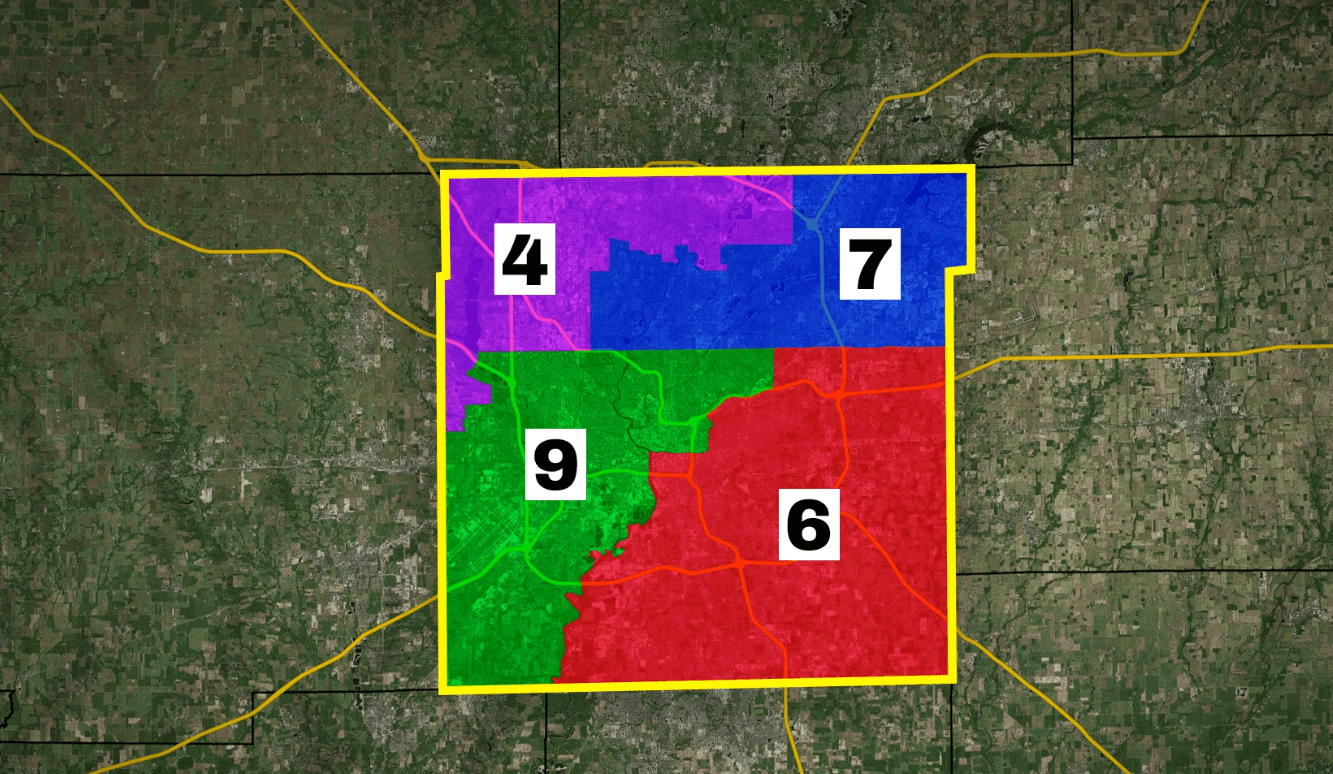
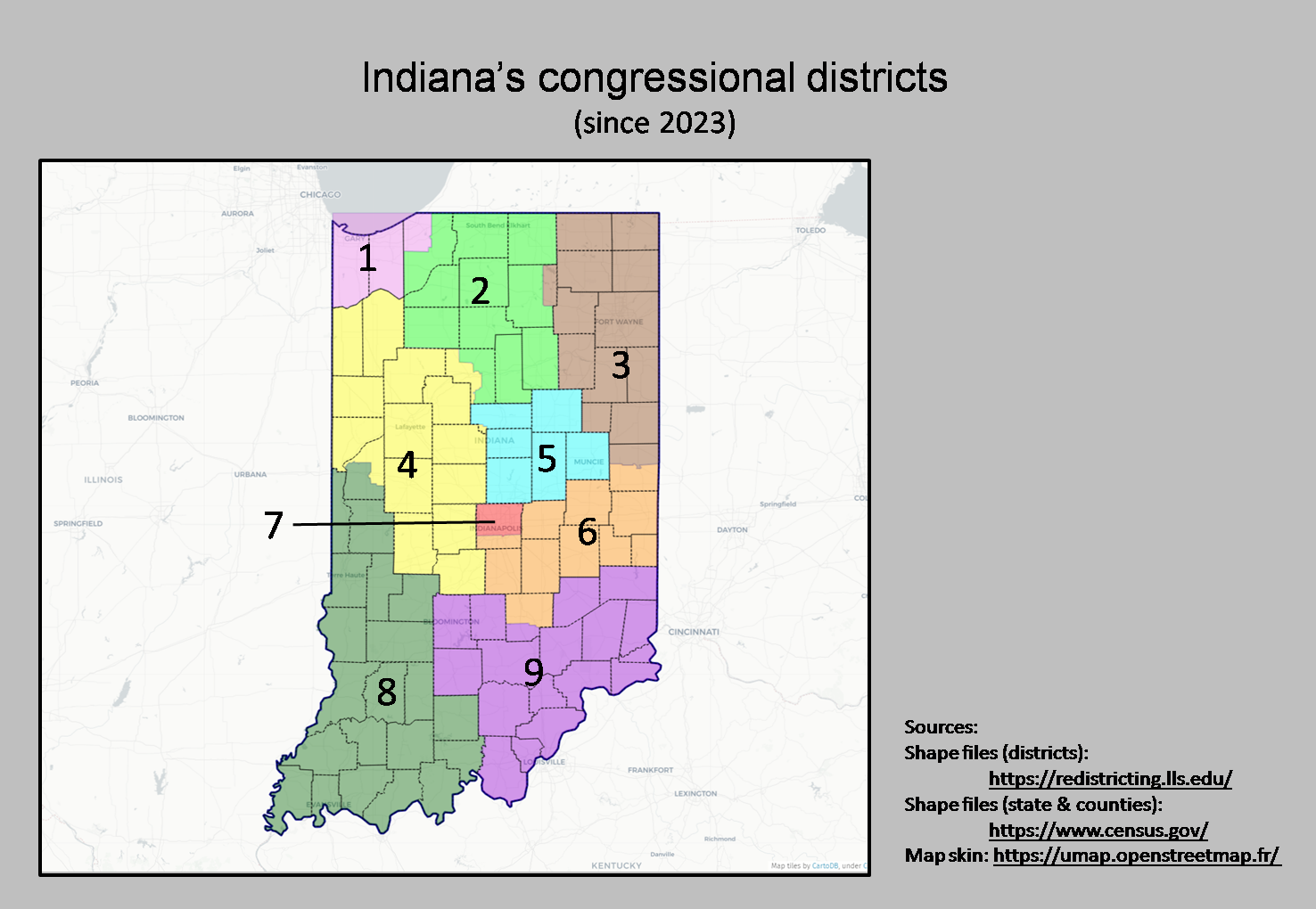
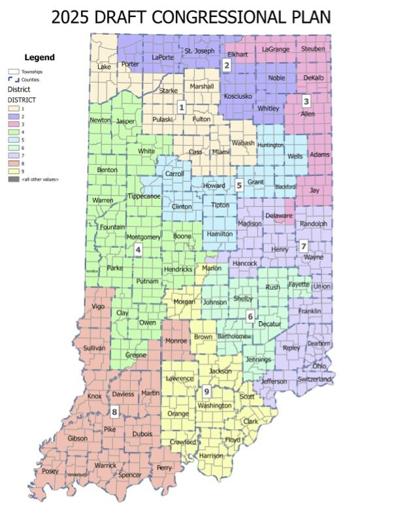
The bill would have redrawn Indiana's congressional map mid-decade to eliminate both Democratic-held seats. The proposed map, drawn by Adam Kincaid — who also drew Texas's redistricting map — would have split Indianapolis among four congressional districts and fragmented Lake County in northwest Indiana. The Indiana Black Legislative Caucus condemned it as "a dilution of Black votes."

Texas, Missouri, and North Carolina complied with similar pressure. Indiana was the only state to resist.

Sen. Spencer Deery (R-West Lafayette) captured the sentiment of the dissenters: "My opposition to mid-cycle gerrymandering is not in contrast with my conservative principles. My opposition is driven by them."
The Vote
31–19
Senate killed the redistricting bill
21
Republicans
voted no
10
Democrats
voted no
The Retaliation
6
Trump-endorsed
primary challengers
1
already
dropped out
Hoosier Voters
Opposed redistricting 53%
Supported redistricting 34%
North Star Opinion Research, Oct 2025 (604 likely voters, ±3.99%)

The Pressure Campaign

The push didn't start with a vote. It started with visits.

Vice President JD Vance came to Indianapolis twice — August 7 and October 10, 2025 — to lobby state legislators personally. Trump hosted House Speaker Todd Huston and Senate President Pro Tem Rodric Bray in the Oval Office on August 26. Governor Mike Braun, who had called the special session at the White House's request, served as the in-state advocate.

When persuasion failed, the threats began.

Hours before the December 11 vote, Heritage Action posted on X: "President Trump has made it clear to Indiana leaders: if the Indiana Senate fails to pass the map, all federal funding will be stripped from the state. Roads will not be paved. Guard bases will close. Major projects will stop."

Lt. Gov. Micah Beckwith appeared to confirm it in a since-deleted post: "The Trump admin was VERY clear about this." The White House denied any threat was made. Governor Braun called Beckwith's claims "fake news." Speaker Huston stated: "Never once was a threat made to me that federal funding would be impacted."

Then came the violence.

At least 14 Republican lawmakers faced serious threats during and after the redistricting debate. Sen. Greg Goode was swatted hours after Trump publicly named him on Truth Social — police broke down his front door responding to a false report that he had murdered his wife and child. Sen. Dan Dernulc was repeatedly swatted. Sen. Michael Crider received an email threatening to firebomb his house and kill him. Sen. Tim Yocum received a pipe bomb threat. Rep. Ed Clere received a pipe bomb threat on December 10.

No perpetrators were identified. The temporal correlation between Trump's public naming of specific senators and subsequent threats against those senators is documented across multiple outlets.

Sen. Crider warned: "Yielding to such pressure teaches them that's what they have to do next."

The Revenge Campaign

Trump endorsed six primary challengers to Republican senators who voted no. The endorsements came in waves: the first three on January 27, 2026, two more shortly after, and one for an open seat. He used nearly identical language for each, labeling incumbents "pathetic RINOs" and challengers "America First Patriots." On March 4, 2026, all six challengers — including one who had already dropped out — visited the Oval Office alongside U.S. Sen. Jim Banks.

But the endorsements are the public face. The real operation is financial.

The Money Behind the Revenge

At least four national organizations — Hoosier Leadership for America, Club for Growth, Fair Maps Indiana, and Turning Point Action — are spending a combined $4-7 million to unseat the senators who voted no. Two of the largest operate through 501(c)(4) nonprofits that are legally exempt from disclosing their donors. State senate campaigns typically run on $50,000-$200,000. The outside spending may exceed candidate spending by 10:1.

See the full dark money breakdown

The ad content is telling. Rather than running purely on redistricting — which polls showed 53% of voters opposed — the ads broaden the attack to include gas taxes, property taxes, and foreign land ownership. This creates the appearance of broad policy disagreement while the actual targeting criterion is a single vote: the December 11 redistricting roll call. Every targeted senator voted against the map. No senator who voted for it is being targeted.

Marty Obst explicitly acknowledged coordination among the groups: "Our team will work closely with aligned efforts such as Club for Growth and multiple political committees supporting the president's priorities."

What's at Stake

This isn't really about maps. It's about whether a sitting president can destroy state legislators of his own party for exercising independent judgment on state legislation.

Mid-decade redistricting is not illegal. Texas did it in 2003, and the Supreme Court upheld it. Partisan gerrymandering was declared non-justiciable in Rucho v. Common Cause (2019). Trump had every legal right to advocate for new maps.

The question is what followed. The scale of presidential coercion deployed against a co-partisan state legislature — Oval Office meetings, threatened funding, dark-money networks, social media attacks, and a retribution campaign against specific individuals — is without modern precedent.

The revenge campaign has already shown cracks. Blake Fiechter dropped out of the SD-19 race in late February, saying: "I felt like I was on a raft alone trying to navigate." He blamed insufficient organizational help despite Trump's endorsement. He attended the Oval Office meeting on March 4 anyway.

The targeted incumbents hold fundraising advantages. Senate President Pro Tem Bray controls more than $3 million in campaign funds to defend them. Four of five targeted senators started 2026 ahead financially.

But the outside money is a different order of magnitude. State senate campaigns that run on $100,000-$200,000 are being hit by groups spending $400,000+ per race. The challengers themselves didn't raise this money — it flows around them, through national organizations operating at a scale these candidates can't match and voters can't see.

On May 5, Indiana voters will decide whether that money buys the result it was designed to buy.

Follow the Money

Where the campaign dollars come from tells you more than any ad. See the full financial picture for every race.

Follow the Money