Five Seats, No Contests, Plenty of Story
Indiana sends nine representatives to Congress. Five of them -- Rudy Yakym in the 2nd, Marlin Stutzman in the 3rd, Jefferson Shreve in the 6th, Mark Messmer in the 8th, and Erin Houchin in the 9th -- hold seats so safe that the general election is a formality. All five won their 2024 races by margins exceeding 20 points. Their Cook PVI ratings range from R+11 to R+19. No serious Democratic challenger is coming in 2026, and in most cases, no serious Republican challenger is either. [1]
That makes them easy to ignore. It shouldn't.
These five members represent different paths into Congress, different ambitions once they arrive, and different relationships with the political machinery that sustains them. Their committee assignments, fundraising patterns, and the way they acquired their seats tell a story about what power actually looks like in one-party districts -- where the primary, not the general, is the only election that matters.
How They Got Here
No two of these incumbents followed the same road.
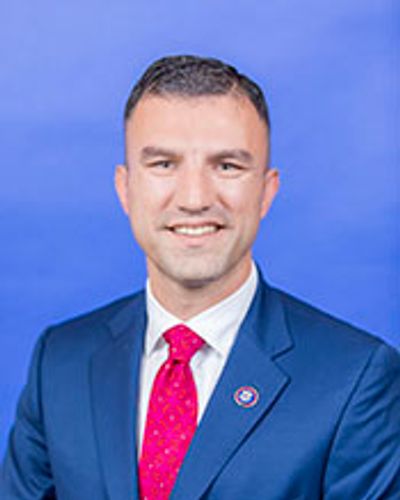
Rudy Yakym entered Congress through tragedy. On August 3, 2022, Rep. Jackie Walorski was killed in a car accident. Yakym, who had served as her campaign finance director, was selected by district GOP precinct committee members as the party's nominee. He won the November special election with 63.3% of the vote and was re-elected in 2024 with 62.7%. Before politics, Yakym held roles at JPMorgan Chase, the Bradley Company in commercial real estate, and Kem Krest in supply chain logistics. He earned his MBA from Notre Dame. [2]
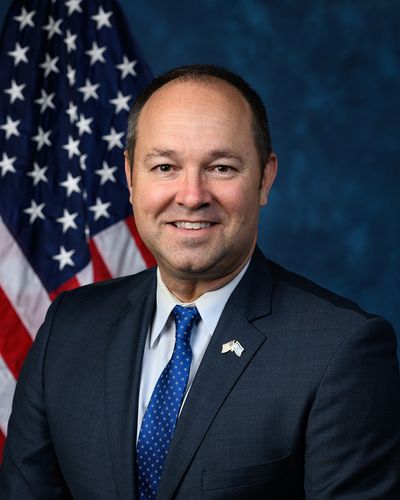
Marlin Stutzman's path is the strangest of the five. He first won IN-03 in a 2010 special election and served three terms before leaving to challenge for the U.S. Senate in 2016. He lost the Republican primary to Todd Young by a 2-to-1 margin. Jim Banks succeeded him in IN-03, held the seat for eight years, then won his own Senate race in 2024 -- creating a vacancy that Stutzman walked back through. He won the open-seat general with 65.0%. It was a second chance, eight years in the making. [3]
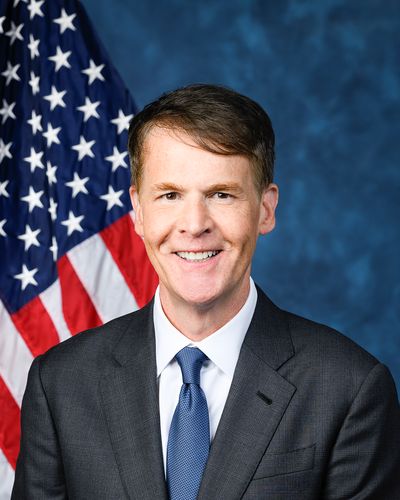
Jefferson Shreve took the most expensive route. He founded Storage Express, a self-storage company he sold to Extra Space Storage for $590 million in 2022, leaving him with an estimated net worth exceeding $599 million -- easily the wealthiest member of Indiana's delegation. He ran for Indianapolis mayor in 2023, spending $13.5 million of his own money and losing to incumbent Joe Hogsett by roughly 20 points. Undeterred, he turned to IN-06, self-funded $5.6 million in loans during the 2024 primary alone, and won the general with 63.9%. [4]
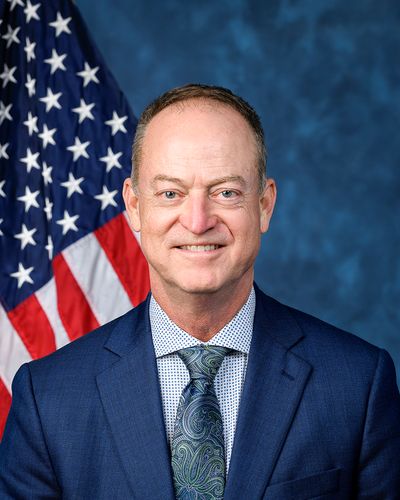
Mark Messmer climbed the ladder. He served in the Indiana House representing District 63 from 2008 to 2014, then moved to the Indiana Senate for District 48 from 2014 to 2024, where he rose to majority leader from 2018 to 2022. A mechanical engineer by training with a Purdue degree, he co-owns Messmer Mechanical Inc. in Jasper. When Larry Bucshon retired from IN-08, Messmer stepped up. He won the 2024 general with 68.0% -- the widest margin in the entire Indiana congressional delegation. [5]
Erin Houchin built the most varied resume. She served in the Indiana Senate for District 47 from 2014 to 2022, worked in child welfare at the Indiana Department of Child Services and Prevent Child Abuse Indiana, founded Contend Communications, and served as regional director for former U.S. Senator Dan Coats. She won the IN-09 primary and general in 2022, then was re-elected in 2024 with 64.5%. [6]
Five members, five origin stories: a party insider chosen after a death, a comeback politician reclaiming old turf, a half-billionaire who bought his way in after losing a different race, a statehouse lifer who worked his way up, and a policy professional who assembled a career across government and nonprofit work.
What They Do in Washington
Committee assignments are where the real work of Congress happens, and these five have landed in notably different places.
Yakym holds the plum assignment: the House Ways and Means Committee, one of the most powerful panels a sophomore member can land. He was involved in crafting the tax provisions of the One Big Beautiful Bill. For a member in his second full term, it is an unusually rapid ascent that suggests he is either being groomed for broader influence or has identified a path to it. [2]
Stutzman serves on the Financial Services Committee -- with subcommittees on Capital Markets and Digital Assets, and Financial Technology and AI -- and the Budget Committee. These are solid but not marquee placements for a member with prior congressional experience. [3]
Shreve sits on the Transportation and Infrastructure Committee and the Foreign Affairs Committee. For a first-termer, these are respectable draws, though neither carries the legislative leverage of Ways and Means or Rules. [4]
Messmer holds three committee seats: Armed Services, Agriculture, and Education and Workforce. For a district anchored by small-town southern Indiana, these are well-matched to constituent interests. [5]
Houchin, though, has assembled the most significant portfolio of the five. She serves on Energy and Commerce, Budget, and the Rules Committee -- a combination that gives her unusual legislative influence for a second-term member. The Rules Committee, in particular, controls which bills reach the House floor and under what terms. Every major piece of legislation passes through it. That seat is a marker of leadership trust. [6]
Follow the Money
If you want to know who is merely holding a seat and who is building something larger, look at the fundraising.
Yakym leads all Indiana House candidates with $2,943,661 raised and $1,494,844 cash on hand. He is unopposed in the Republican primary. Nobody needs three million dollars to defend a seat this safe. [2] [7]
Shreve reports $2,296,135 raised with $2,119,426 cash on hand -- the highest cash-on-hand figure in the delegation. But those numbers require a caveat: they include $2 million in self-loans this cycle, bringing his total campaign self-lending since 2024 to $7.9 million. Shreve's financial independence is unmatched in the Indiana delegation. No other member can write themselves a check for a Senate race on short notice. [4] [7]
Houchin has raised $1,084,190 with $1,144,341 cash on hand, a notable sum for a member with no primary opponent. That figure likely reflects her committee assignments and party fundraising obligations rather than electoral anxiety. [6] [7]
Messmer's $701,391 raised with $544,009 cash on hand is consistent with what a safe-seat incumbent needs to maintain a presence. He has a Trump endorsement and a nominal primary challenger in Daniel George. [5]
Stutzman's $618,303 with $221,320 cash on hand is the lowest of the five -- the only figure that might raise a question. He faces a primary challenge from Jon Kenworthy, a former staffer for Senator Mike Braun and an Army veteran. Low fundraising combined with a credentialed challenger may reflect the awkwardness of the comeback narrative: Stutzman is simultaneously the most experienced of the five and the most electorally tested. [3]
The pattern is clear. Yakym and Shreve are raising money far beyond what their electoral situations require. Both hold committee seats that attract donor interest -- Ways and Means for Yakym, Transportation and Infrastructure for Shreve -- and both appear to be building warchests that suggest longer-term ambitions, whether for leadership positions or future statewide campaigns. Stutzman and Messmer are doing the minimum. Houchin is somewhere in between, raising what her committee portfolio demands. [7]
The Trump Endorsement That Didn't Happen
Trump endorsed Stutzman, Shreve, Messmer, and Houchin for 2026. He also endorsed Jim Baird in IN-04 and Victoria Spartz in IN-05. [8]
He did not endorse Rudy Yakym.
Yakym holds the safest seat, raises the most money, serves on the most powerful committee, and is a loyal Trump supporter. The Washington Examiner's comprehensive Trump endorsement tracker confirms the omission. Whether this is an oversight, a signal about Yakym's standing with the Trump political operation, or a consequence of the fact that Yakym acquired his seat through a vacancy process outside Trump's network is unclear. But the absence is conspicuous in a delegation where nearly every other incumbent received the nod. [8]
The Landscape in May
For voters in these five districts, the practical reality is stark: the May 5 primary is the only vote that will matter for their House race. Only IN-03 has even a nominal contested Republican primary with Kenworthy challenging Stutzman. Democratic primary fields exist in IN-06, IN-08, and IN-09 -- four candidates each -- but the winners of those primaries will face incumbents in districts with Cook PVI ratings between R+11 and R+19. [1]
What these five seats reveal collectively is how Indiana's one-party congressional districts actually function. The general election is a rubber stamp. The primary is barely a contest. Power flows not from voter accountability but from committee assignments, fundraising networks, party endorsements, and the internal dynamics of a Republican delegation that answers more to its own leadership structure than to anything resembling competitive pressure.
The more consequential choices on these voters' May ballots may well be the state senate and state house primaries -- particularly where Trump-backed redistricting revenge candidates are on the ballot. At the congressional level, in five of Indiana's nine districts, the 2026 race is already over.