The Man Nobody Picked
On June 15, 2024, something happened at the Indiana Republican state convention that hadn't happened in decades: the delegates told the nominee to go to hell.
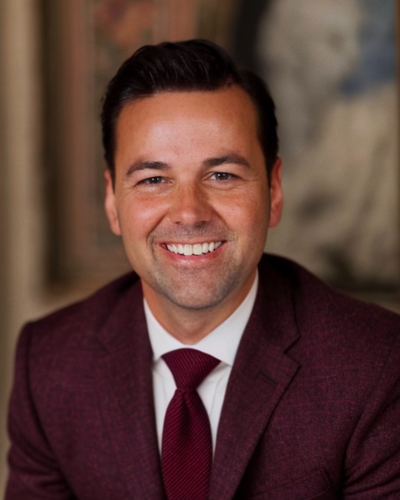
Mike Braun, the governor-elect, wanted state Rep. Julie McGuire as his running mate. The convention delegates -- the grassroots, the true believers, the people who show up on a Saturday to cast ballots for party officers -- wanted Micah Beckwith. A pastor from Noblesville who describes himself as a Christian nationalist. A man who had run for Congress in IN-05 in 2020 and finished third with 12.7%. A man nobody in Republican leadership had chosen for anything. [1]
Beckwith beat McGuire 891 to 828. And with that, Indiana had a lieutenant governor who owed his office not to the governor, not to the party establishment, but to a room full of delegates who wanted someone louder, angrier, and less interested in playing nice.
It is impossible to understand what happened during Indiana's redistricting fight without understanding this fact: Micah Beckwith was an outsider who had seized an insider's office. He had no loyalty to the Senate Republicans he would preside over. He had no debt to the governor he served alongside. The only loyalty that mattered was to the movement that put him there -- and, by extension, to the man at the top of that movement.
Reprimanded Before Spring
Beckwith had been in office for weeks when Senate President Pro Tem Rodric Bray did something a former 25-year senator said he could not recall ever happening: Bray issued a formal written reprimand to the lieutenant governor. [2]
The offenses were, in a sense, trivial. Beckwith had been posting on social media during active Senate sessions. He had worn recording-enabled "AI glasses" on the Senate floor. These are violations of decorum, not of statute. But the reprimand was not really about glasses or tweets. It was a message from the Senate's institutional leadership to a lieutenant governor who did not respect the institution he presided over.
Beckwith's response, according to his own former senior advisor Erin Sheridan, was effectively: "Too bad, so sad, I'm going to continue behaving that way -- get used to it." [2]
The Senate did not, in fact, get used to it.
"Find Your Backbone"
By October 2025, the redistricting battle was joined. The Trump administration wanted Indiana to redraw its congressional map mid-decade, eliminating the sole remaining competitive district and creating a 9-0 Republican delegation. The Indiana House had passed the bill. The Senate was the obstacle.
The Senate majority communications office said publicly that "the votes aren't there." This was the kind of quiet signal that, in normal legislative politics, closes a chapter. Leadership has counted heads. The bill is dead. Move on.
Beckwith did not move on. He issued a public statement calling his own party's senators cowards:
I am calling on my Republican colleagues in the Indiana Senate to find your backbone, to remember who sent you here, and to reclaim Indiana's rightful voice in Congress by drawing a 9-0 map. [3]
He accused colleagues of "failing to stand with President Trump." He warned that the Senate would "cower, compromise, or collapse at the very moment courage is required." This was not the language of a presiding officer mediating between factions. This was a factional combatant using the presiding officer's megaphone to bludgeon his own caucus.
The statement also revealed something about Beckwith's theory of representation. "Remember who sent you here" did not mean the voters of their districts. It meant the party apparatus -- and, by implication, the president at its head. The question of who sent Indiana state senators to the Statehouse was, for Beckwith, not a question about Hoosier constituents. It was a question about loyalty to the national party leader.
December 11: The Vote and the Post
On December 11, 2025, the Indiana Senate voted 31-19 against the redistricting bill. Twenty-one Republicans joined all ten Democrats. It was a decisive repudiation of the pressure campaign -- from Trump, from Heritage Action, from Beckwith, from the governor.
During the debate, Beckwith presided over the chamber while simultaneously live-posting on social media. He reposted praise of pro-redistricting speeches. He posted about "the far left" disrupting proceedings. A former Democratic candidate replied: "Are you live tweeting while presiding over the Senate? You've gotten in trouble for this before." He had, indeed, been formally reprimanded for exactly this. [4]
Then, after the vote failed, Beckwith posted something on X that changed the entire story:
The Trump admin was VERY clear about this. They told many lawmakers, Cabinet members and Gov. Mike Braun and I that this would happen. The Indiana Senate made it clear to the Trump Admin today that they do not want to be partners with the WH. The WH made it clear to them that they'd oblige. [5]
By the next morning, the post was deleted.
The Credibility Standoff
What followed was a remarkable public standoff in which nearly every principal denied what Beckwith had said -- including the governor Beckwith claimed had heard the same threats.
Gov. Braun called Beckwith's claim "fake news." House Speaker Huston said: "Never once was a threat made to me that federal funding would be impacted based on the outcome of redistricting." White House spokesman Davis Ingle said Trump "has never threatened to cut federal funding and it's 100% fake news to claim otherwise." Indiana Democratic Party chair Karen Tallian asked the question that hung over all of it: "Is someone lying?" [6]
Someone was. The question is who, and the evidence points in an uncomfortable direction for the deniers.
Hours before the Senate vote, Heritage Action -- the lobbying arm of the Heritage Foundation, closely aligned with the Trump White House -- posted an explicit threat on X that Beckwith had not yet made public: "President Trump has made it clear to Indiana leaders: if the Indiana Senate fails to pass the map, all federal funding will be stripped from the state. Roads will not be paved. Guard bases will close. Major projects will stop." [7]
That post was not deleted. It remains publicly accessible.
And Braun's own prior statements cut against his denial. While lobbying for the redistricting bill, the governor had told lawmakers there would be "consequences of not working with the Trump administration as tightly as we should." The word "consequences" is vaguer than "all federal funding will be stripped." But it acknowledges the same basic reality Beckwith described: the administration would respond punitively to defiance. [8]
So the record contains: Beckwith's specific, detailed claim (deleted); Heritage Action's specific, explicit threat (not deleted); Braun's own invocation of "consequences" (on the record); and a set of denials from every official who would face political or legal exposure if the threats were confirmed.
The weight of this evidence favors the conclusion that federal funding threats were communicated. The dispute is over who authorized the specific language, not over whether the pressure existed.
The Enforcer's Toolkit
What makes Beckwith's role distinctive is not that he agreed with Trump on redistricting. Many Indiana Republicans did. It is how he operated -- as a federal political enforcer embedded within state government, using a constitutionally ceremonial office as a platform for pressure that the governor himself would not apply so openly.
Consider the toolkit: public statements attacking his own caucus by name. Social media live-posting from the presiding officer's chair during floor debate. A Statehouse rally staged with Secretary of State Diego Morales. The disclosure -- accidental or deliberate -- of federal funding threats that every other official denied. And throughout it all, a posture of defiance toward the very institution he was sworn to preside over, embodied in that response to Bray's reprimand: "Too bad, so sad."
A governor-aligned lieutenant governor would never have done any of this. Beckwith could do all of it precisely because he was not governor-aligned. He owed Braun nothing. He owed the Senate nothing. His constituency was the convention floor and the movement behind it. That independence -- won by defeating the governor's own pick -- made him the perfect instrument for an external pressure campaign. He had no institutional loyalty to violate because he had never had any.
What This Tells Us
The Beckwith episode is a case study in how party loyalty machines work in practice. The mechanism is not subtle: a federal administration wants a state legislature to act; the legislature resists; pressure is applied through aligned media, advocacy organizations, public attacks on individual legislators, and -- if Beckwith's deleted post and Heritage Action's surviving post are credited -- direct threats to federal funding.
The constitutional tension here is real. Federal funding is disbursed under Congressional appropriation. Using it as leverage over state legislative decisions on redistricting is not contemplated by funding statutes. It is, at minimum, an assertion of executive authority over state sovereignty that should concern anyone who takes federalism seriously, regardless of party.
But the practical tension may matter more for Indiana voters. Their lieutenant governor -- the man who presides over their state Senate -- used that position to advance a federal political agenda against the expressed will of the legislative body. When the Senate voted 31-19 against the bill, Beckwith did not accept the result. He posted that the White House would "oblige" the Senate's refusal to be "partners" -- a threat of retaliation against the state for exercising its own legislative judgment.
The post was deleted. The posture was not.
Beckwith remains lieutenant governor. He remains Senate President. And the redistricting question, while dead in the 2025 session, is not permanently settled. The enforcer still holds the gavel.